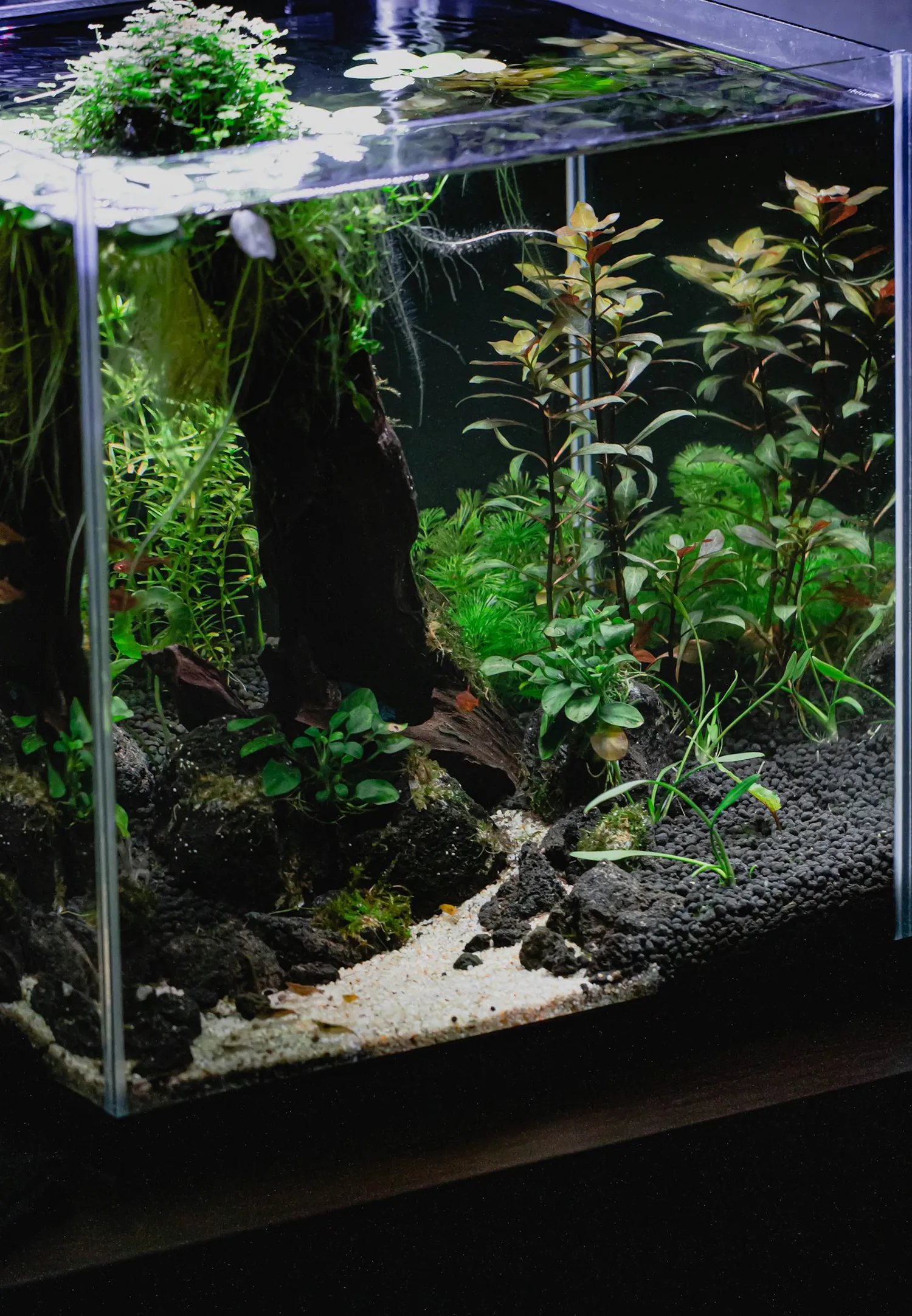
Every species lives somewhere
Stock a tank by the layer, not by the shelf. Each band below is a part of the water column, and the records in it are the animals and plants that hold that part.
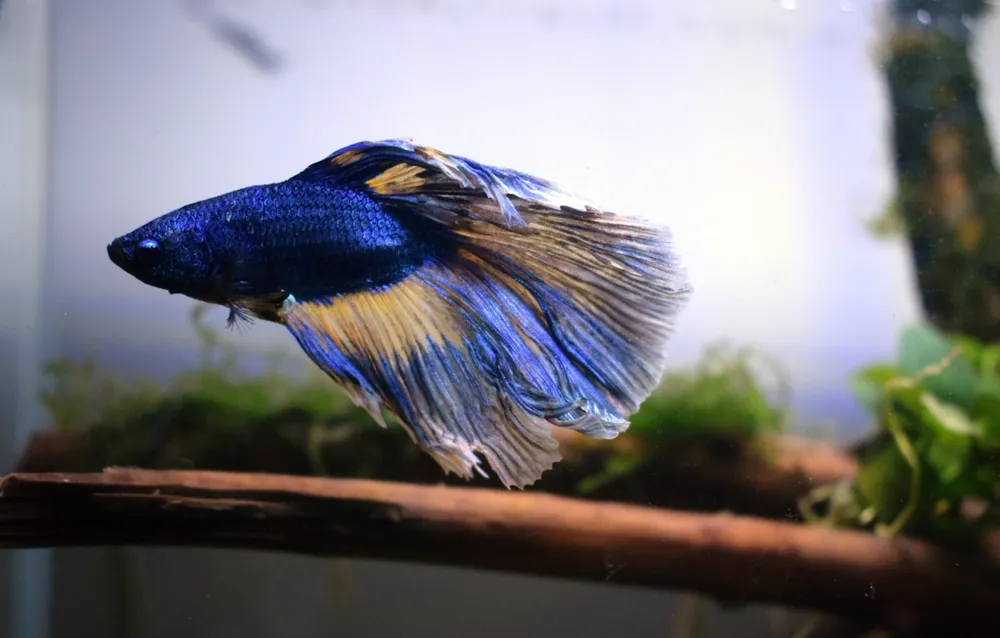
Air breathers and territory holders. Whatever lives here decides what the rest of the tank can be.
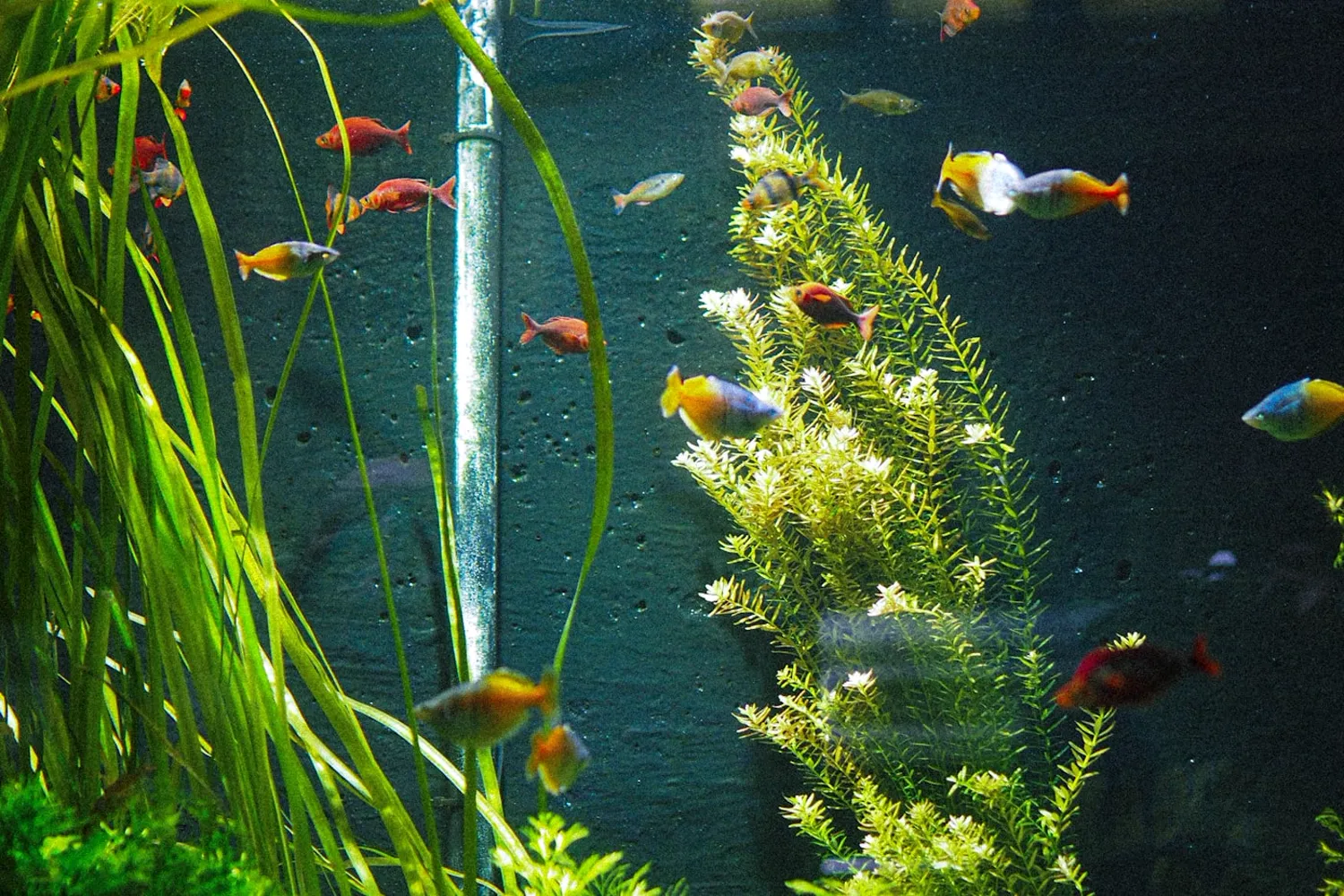
Schooling fish that fill the middle and never compete for the surface. Six is where they start behaving like a school.
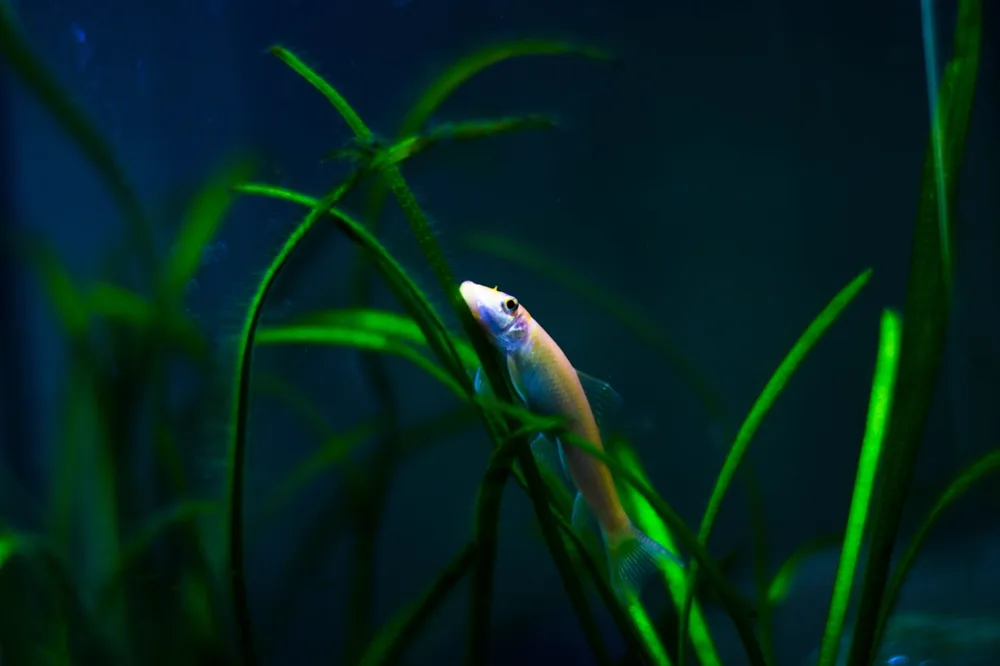
The floor crew. They need soft substrate for their barbels and a group to come out in.
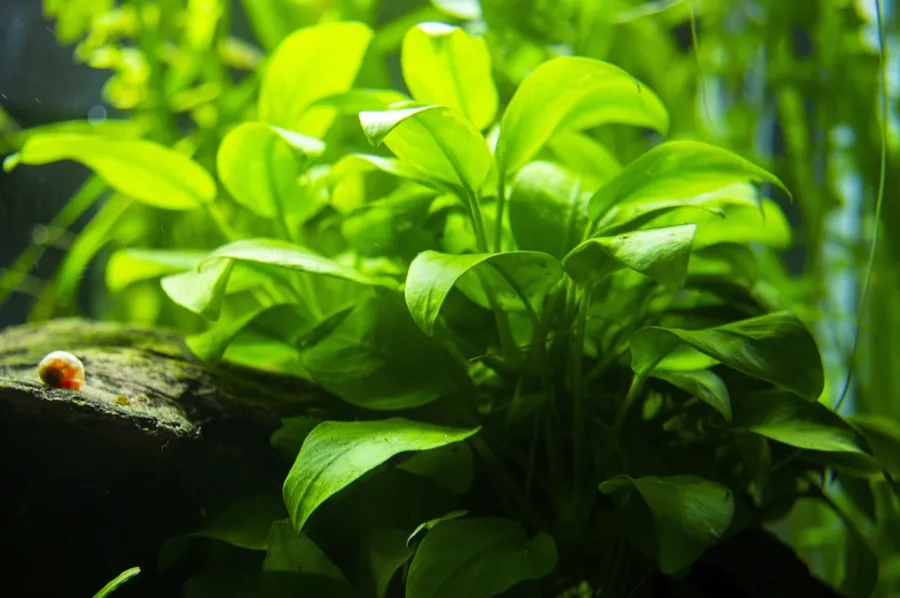
Invertebrates and rooted plants. Small enough to be food, so who lives above them is the whole question.
Something is wrong right now
Half of everyone arriving here has a tank in front of them and a problem in it. Start with what you can see.
What a record is
Every species page carries the same fields in the same order, so two species can be compared without reading two essays. This is the record for the betta, exactly as it appears.
Three things we do differently
- Blanks stay blank. Two fields above are empty because no source we trust states a figure. A guessed number is the one that gets copied into a hundred other pages.
- Disagreements get printed. On the betta record, one source says never keep it in a community tank and another lists five tank mates. Both are on the page, with what we do about it.
- Every value carries its source. The record names where each number came from and the month it was checked.
Two species, one set of fields
This is what the same fields buy you: a comparison you can make in ten seconds, without reading two articles and holding the numbers in your head.
Records you can read today
Forty eight so far, each verified against named sources, each with its blanks visible. A photograph goes up when we have one of that species, not a lookalike from the same tank, which is why most of these are still plates.
- Tank
- 5 gal
- Temp
- 73 to 79 °F
- Group
- 2+
- Tank
- 10 gal
- Temp
- 72 to 78 °F
- Density
- 2 per gallon
- Tank
- 50 to 80 PAR
- Temp
- 72 to 82 °F
- Size
- Mid to background
- Tank
- 55 gal
- Temp
- 78 to 84 °F
- Group
- 6 juveniles
- Tank
- Low light
- Temp
- 72 to 82 °F
- Size
- 2 to 40 in
- Tank
- 10 gal
- Temp
- 75 to 80 °F
- Group
- 1 to 6
How many fit in your tank
Pick a volume and a species. The answer comes from that species' record, and where the record has no figure, it says so instead of guessing.
Five gallons is the smallest tank our source allows for this species, and it only works with a heater holding around 80 °F.
Six is the minimum school the record states, and five gallons is its stated minimum tank. That fills it.
The record puts dwarf species at 10 gallons and most corydoras at 20 or more, in a group of six of the same species.
The record puts the minimum at 20 gallons for a group of three to six. Fewer than three and they never come out.
Our source states the adult size and the diet but no minimum tank, so we will not print a figure. What it does state: if it fits in a fish's mouth, that fish is a predator.
The record asks for minerals for the shell, crushed coral or a mineral supplement, and a tight lid: they climb out.
Ten is the size the record prefers. Small tetras, rasboras or corydoras can share it when there is real cover.
The record's own school range. They hold the middle of the column, so a centerpiece fish can go above them.
Ten gallons suits the dwarf species. Everything larger wants 20 gallons or more per the record.
Twenty gallons is the minimum this record states, and the group size is what drives it, not the size of the fish.
Same answer at every volume until we verify one. The question that actually decides it is what lives above them.
Algae supply is the real limit, not volume. Cover every snail sized hole in the lid.
The betta holds the surface, so the rest of the column is free. Still one betta: this is the species, not the tank.
It gives no per gallon figure, so we do not print one. More water buys stability, not a bigger number we can source.
This is the size the record recommends for most corydoras. Smooth sand matters as much as volume: they feed with their barbels.
The record's group range at its minimum tank. Gravel wears their barbels down, which is how they end up hiding for a year.
No sourced minimum tank. Bettas are described as notorious for going after shrimp, which matters more than the gallons.
The record gives no per gallon figure. It gives minerals, a pH of 7.5 to 8.5, and a warning about escapes.
A missed water change in 29 gallons is a Tuesday. It is still one male, whatever the volume.
We could guess higher and it would probably be fine. Probably is not a number this record is willing to print.
Floor space is what you are buying here. Mixing species is worse than a bigger group of one.
A longer footprint does more for this species than extra gallons of height.
We would rather leave this blank than hand you a number nobody stands behind.
Blanched zucchini or algae wafers once the natural supply is gone, per the record.
Nine of these twenty four answers are a refusal, because the records behind them do not state a figure. That is the calculator working, not failing. Open the full calculator
What a boxed kit leaves out
Each list below comes from the records of the species that tank size actually suits, not from a shop's bundle.
- Adjustable 50 W heaterholds 80 °F
- Live or silk plantscover
- Frozen bloodwormweekly
Nothing here is a paid link. It is the shortfall between what these records ask for and what a boxed kit contains.
- Baffled filtergentle surface
- Fine sand, 20 lbfor barbels
- Sinking wafersbottom feed
Nothing here is a paid link. It is the shortfall between what these records ask for and what a boxed kit contains.
- 100 W heaterholds 74 to 80 °F
- Crushed coralsnail shells
- Driftwood and caveshiding places
Nothing here is a paid link. It is the shortfall between what these records ask for and what a boxed kit contains.
When the record is not the question
How a record gets written
Named sources, and only named sources
Every field starts from published care sources we are willing to name on the page. Four are in use: Seriously Fish, Aquarium Co-Op, Shrimp Science and Wikipedia.
Cross checked field by field
Minimum tank, temperature, pH, hardness, size, diet, water column, group size. Where two sources give different figures, we keep both.
Disagreements printed, not resolved quietly
The betta record carries a source saying never keep it in a community tank and a source listing five tank mates. You get both, and what we do about it.
Blanks published as blanks
A field with no verified figure stays empty and says so. Nine of the answers in the calculator above are that rule doing its job.
Dated, and corrected in public
Each record carries the month it was checked. Corrections are welcome and are made on the record itself.
Waiting on a species?
Most species in the hobby do not have a record here yet. Tell us which one you want and we will write that one next, in the order people ask for them.
No account, no newsletter. One field, one purpose.
What one freshwater aquarium care record holds, and where each figure came from
Every page on this site argues for the same thing and this is the thing itself: nine fields, one species, and a named source behind each figure. The table below is the cherry shrimp record, printed as it appears on its own page.
| Field | Recorded | Where it comes from |
|---|---|---|
| Minimum tank | 5 to 10 gal | Shrimp Science, five minimum and ten preferred |
| Temperature | 59 to 86 °F | Shrimp Science, as 15 to 30 °C, a tolerance rather than a target |
| pH | 6.5 to 8.0 | Shrimp Science and Shrimpy Business, the same band |
| Hardness | 71 to 179 ppm | Shrimp Science GH 4 to 10; two other sources disagree upward |
| Adult size | 30 to 40 mm | The span across three sources |
| Diet | Algae, biofilm and detritus | Every source that describes a diet |
| Water column | Substrate | Ours, from the behavior every source describes |
| Lifespan | 1 to 2 years | Shrimp Science and Wikipedia, independently |
| Growth rate | Mature at about two months | Wikipedia |
Read the right hand column rather than the middle one. That is the whole difference between this site and a care sheet: not the figures, which anyone can copy, but the sentence beside each one saying who published it and what the others said instead. Where a field would need a number nobody published, it stays blank and the blank carries the reason. The method page is the long version of that, and the A to Z index is every record we hold.
Questions about this site
How many freshwater aquarium care records are there?
Forty eight at the moment, and the number is printed on every silo page rather than rounded up. The databases that rank for this subject hold two hundred to seven hundred profiles. We are not going to pretend to compete on that and it is not the comparison we are asking you to make.
What forty eight records buy is the thing breadth costs: every figure on every one of them names the source it came from, and every field that would need an invented number is blank with the reason attached.
Why is a field on a care record blank?
Because no source we name states it. A blank here is a finding rather than an omission, and each one stores a note saying which sources were checked and what they said instead. Closing a blank means finding a source that publishes the figure, not choosing a number that looks reasonable.
Four lifespan blanks closed that way in a single day recently, each from a care guide that turned out to publish one. One is still open, on the otocinclus, against four sources that all omit it.
What do you do when two sources disagree?
Print both, with their names on them, and say which figure the field carries and why. There is a great deal of disagreement: hardness on the kuhli loach runs 0 to 143 ppm on a species profile and 143 to 214 in a care guide, and those two ranges meet at a single point.
Averaging them would produce a number nobody published, which is the one thing this site will not do. The water and health topic has the sharpest example, where two sources cannot agree on what a safe ammonia reading is.
Which freshwater fish is this site missing?
Most of them, and the queues say which. The freshwater fish silo names twenty species in its queue, sorted by family, and the honest summary there is that it holds at least one species from eight families and none from one. The cichlids now hold two written records, the angelfish and the oscar, with three still queued.
The goldfish and the angelfish were the first two names in that queue and both are written now, from six sources each. They are the two records where the sources argue hardest about the same thing: how much water the fish needs. On the angelfish, one source publishes 55 gallons on one page and 20 on another. The next name on the list is the discus.
Is there a tool, or is it all reading?
There is one tool and it does one thing: the stocking calculator takes a tank size and prints what these records support at that volume, plus the heater setting the mix allows. It refuses to answer where a record is blank.
It also returns no bioload percentage, because none of the care sources we compile from publishes a waste figure for any of these species. Every competing calculator gives you that number. This one says why it does not.