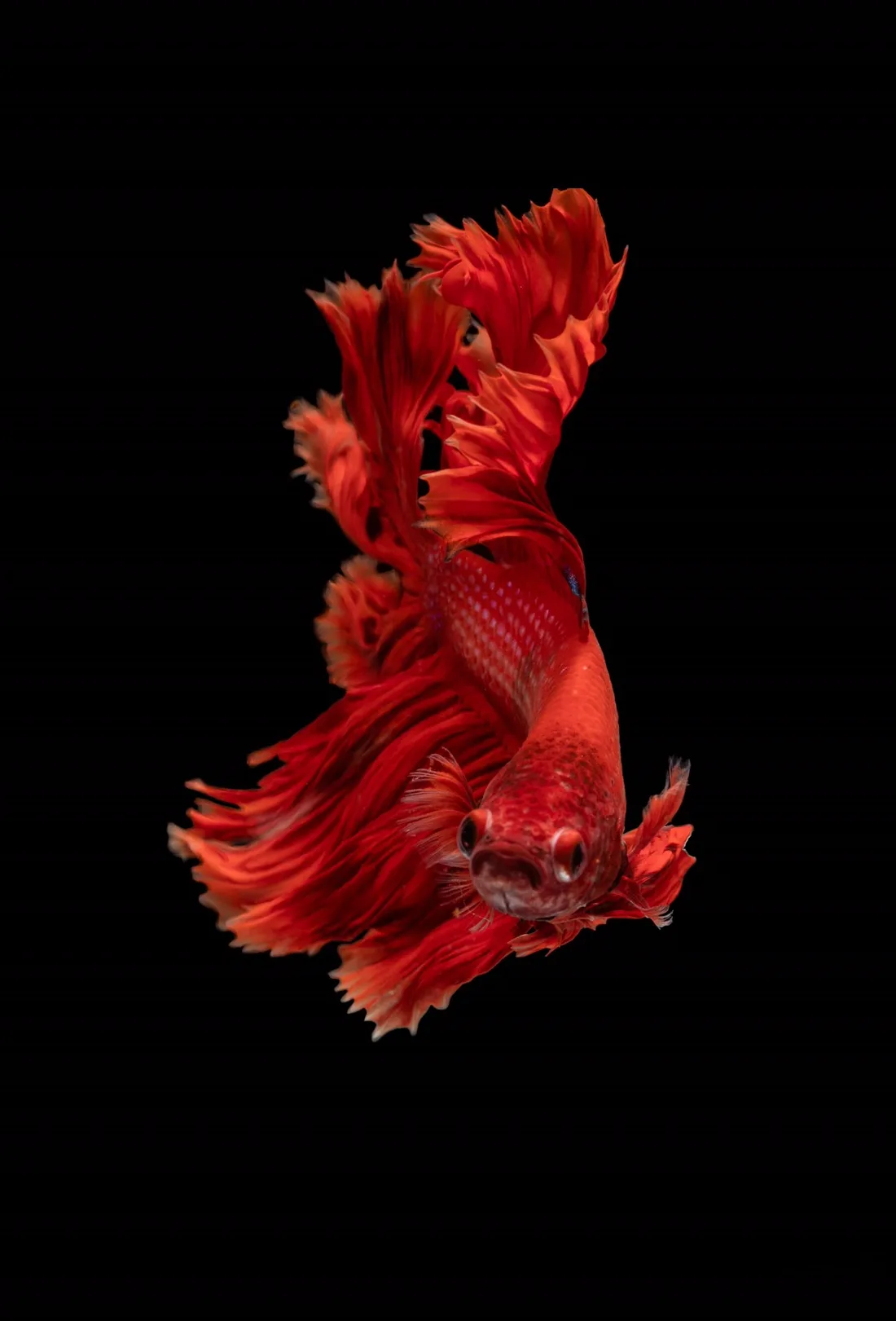
A fish that breathes air
One anatomical fact explains the shape of this fish, the shape of its tank, and most of the advice that gets it killed.
Bettas carry a labyrinth organ, an accessory lung that takes oxygen straight from the air above the water. It is why a betta survives in a jar long enough for a shop to sell it in one, and why that jar was never a home. Surviving and living are different measurements and this record only deals in the second.
What the organ actually asks for is a warm, humid layer of air directly above the water line. A tight lid holds that layer. An open tank in a cold room replaces it with a draft, so every trip to the surface costs the fish heat it cannot spare.
It also means a betta is never fully judged by water volume alone. The air above the water is part of its habitat, which is why lids, surface flow and room temperature keep reappearing in the sections below.
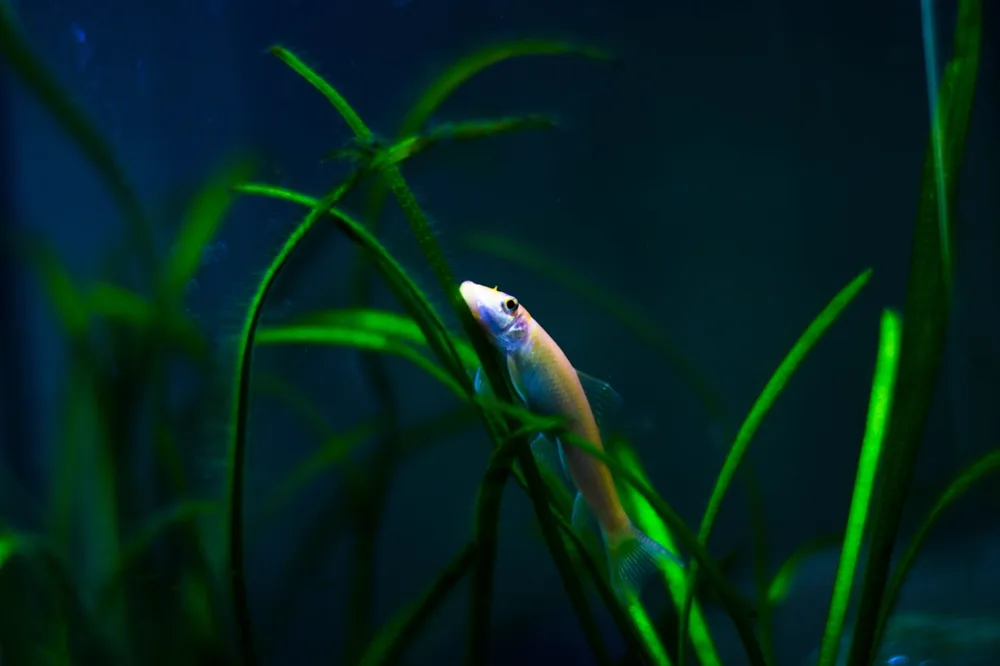
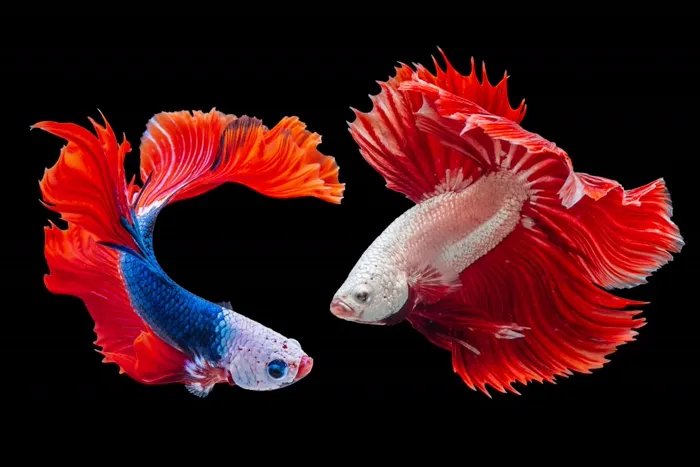
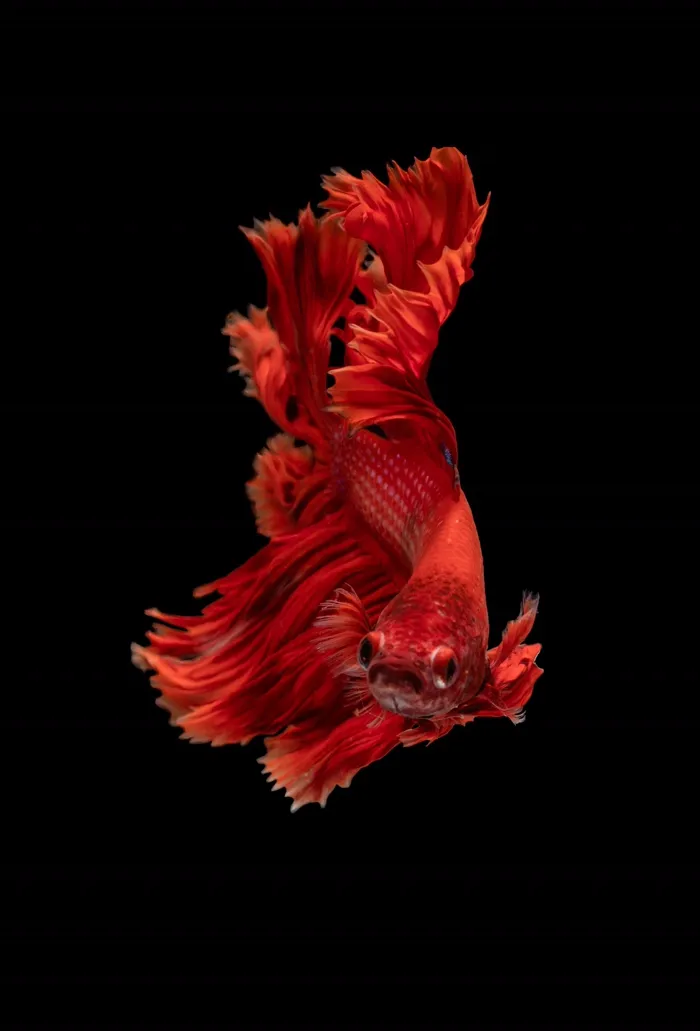
One species, many strains
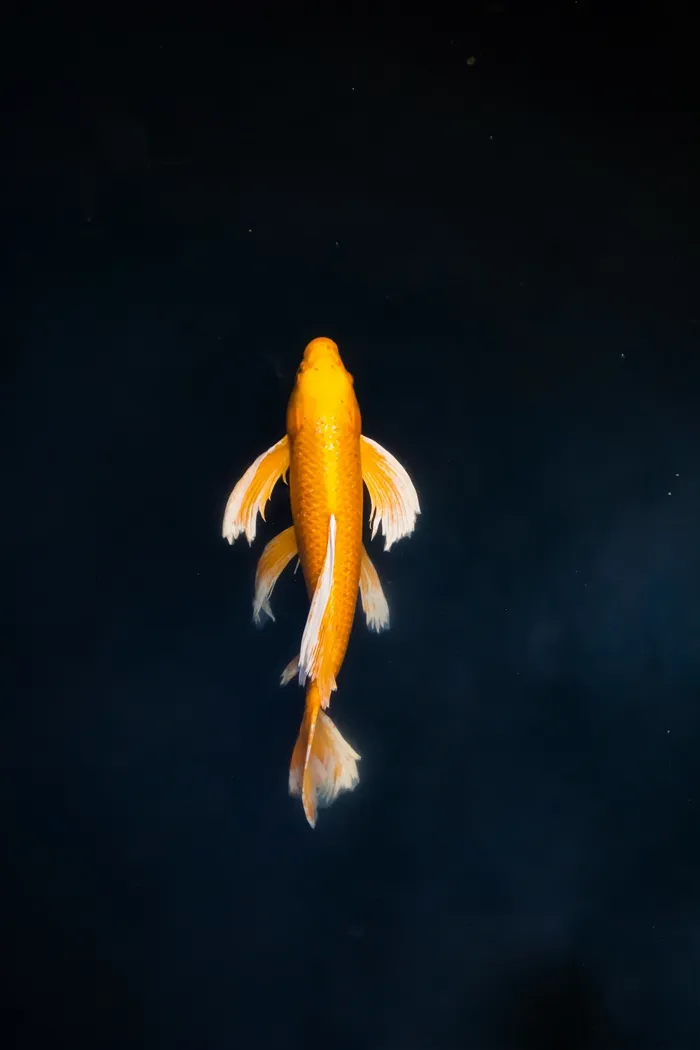
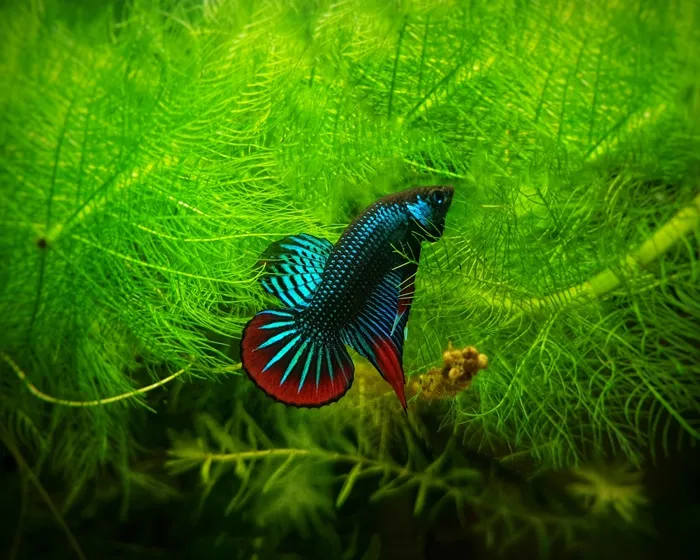
Ornamental breeding has pushed color and finnage further in this species than in almost anything else in the hobby. Every fish below is the same animal with the same requirements: the record does not change because the fins do. Our koi betta fish guide tests that against two pages written about one pattern, and three rows moved anyway: both give the adult size as 3 inches against the 2.8 here, one types the fish an omnivore against the carnivore here, and one gives 2 to 3 years against the 3 to 4 here.
The numbers, as water
Each value below is the range this species tolerates, drawn as the water it tolerates, in the color a test kit hands you. The bright line is where it actually wants to sit.
Tolerates 72 to 86. The bottom of that range is where the sitting on the bottom stories come from.
Wild collected fish prefer 5.0 to 7.0. Chasing a decimal is rarely the fix; holding one number steady is.
A tolerance this wide is why hardness is almost never the problem in a betta tank.
The jump that matters is not gallons, it is margin. In five gallons a missed water change is a crisis; in twenty it is a Tuesday.
The amber in each tank is the same amount of waste. Four times the water is four times the dilution, which is the whole reason a bigger tank forgives more, and why the fish in the smallest one pays for your week.
| Field | Seriously Fish | Aquarium Co-Op | PetMD | Fishkeeping World |
|---|---|---|---|---|
| Lifespan | not stated | not stated | 3 to 5 with proper care | 2 to 4 average |
| Minimum tank | 45 by 30 cm base | 5 to 10 gal | 2.5 gal at least, 5 to 10 ideal | 10 gal in its table, 2 gal in its text |
| Temperature | 72 to 86 °F | around 80 °F | 76 to 81 °F | 72 to 86 °F |
| pH | 6.0 to 8.0 ornamental | not stated | about 7, tolerates 6.5 to 7.8 | 6.5 to 7.0 |
| Adult size | 60 to 70 mm | not stated | 2.5 to 3 in body | 2 to 3 in |
| Females together | not stated | not stated | sorority, 10 gal, hiding places | groups of five or more |
| Water change | not stated | not stated | 15 to 25 percent weekly | not stated |
The minimum tank row is worth stopping on, because one source disagrees with itself inside one page. Fishkeeping World's overview table says 10 gallons and its text says bettas need a minimum of two gallons. We are not going to pick one. What every source here agrees on is the direction and the reason: PetMD puts the floor at 2.5 gallons and immediately says 5 to 10 is ideal for stable water, and this record's own claim is that five gallons with a heater beats ten without one.
Never two males, and the mirror
This record files the group size as one male, never two and did not say what happens if you ignore it. Fishkeeping World does: two males housed together, even in a large tank, will likely fight to the death. That is the only source we hold that states the consequence rather than the rule.
- It is not only other bettas. Fishkeeping World states that brightly colored fish with long fins can be mistaken for another male, which is the mechanism behind the whole tank mate problem rather than a temperament note.
- A mirror is enough. The same source states that holding a mirror or a picture of another male up to the glass makes a male aggressive toward the image. Nothing else on this site describes an animal that can be provoked by a photograph.
- Which is why PetMD's list is a shape rather than a species list. It names tiger barbs as known fin nippers and long finned species the betta may spar with, and both halves follow from the same misidentification.
- And why the shrimp refusal on this site is what it is. The cherry shrimp record marks this pairing never, and the reason is appetite rather than aggression, which is a different failure with the same outcome.
Female bettas, and the sorority both new sources describe
A record that says one male, never two and then never mentions the other sex is telling half a story. Both new sources tell the rest of it, and they describe the same arrangement with different numbers attached.
- PetMD: female bettas may be kept in groups called a sorority, the tank should be at least 10 gallons, and the setup needs lots of hiding places.
- Fishkeeping World: female bettas can safely be kept in groups of five or more, known as a sorority.
- What that adds up to is a floor on both axes: five or more animals, ten gallons or more, and cover. Neither source gives a maximum and neither gives a figure for two or three females, which is the arrangement people actually try.
- What this record will not do is turn a sorority into a field. The group size stays one male, never two, because that is the figure for the fish this record is about, and the female arrangement is a different question with a different floor.
Feeding, and the one maintenance figure anybody publishes
The diet field on this record reads carnivore, with small live or frozen invertebrates named behind it. Two sources add the dry half and the frequency. PetMD calls it carnivorous, names high protein foods formulated for bettas, and gives once or twice a day. Fishkeeping World names specially formulated betta flakes or pellets with brine shrimp and bloodworms as treats.
PetMD is also the only source we hold that publishes a maintenance schedule for this species: change 15 to 25 percent of the water weekly. And on filtration it asks for low or adjustable flow, because strong currents stress a betta, which is the same instruction the kuhli loach record carries for a completely different reason.
Cover is what turns a box of water into a territory
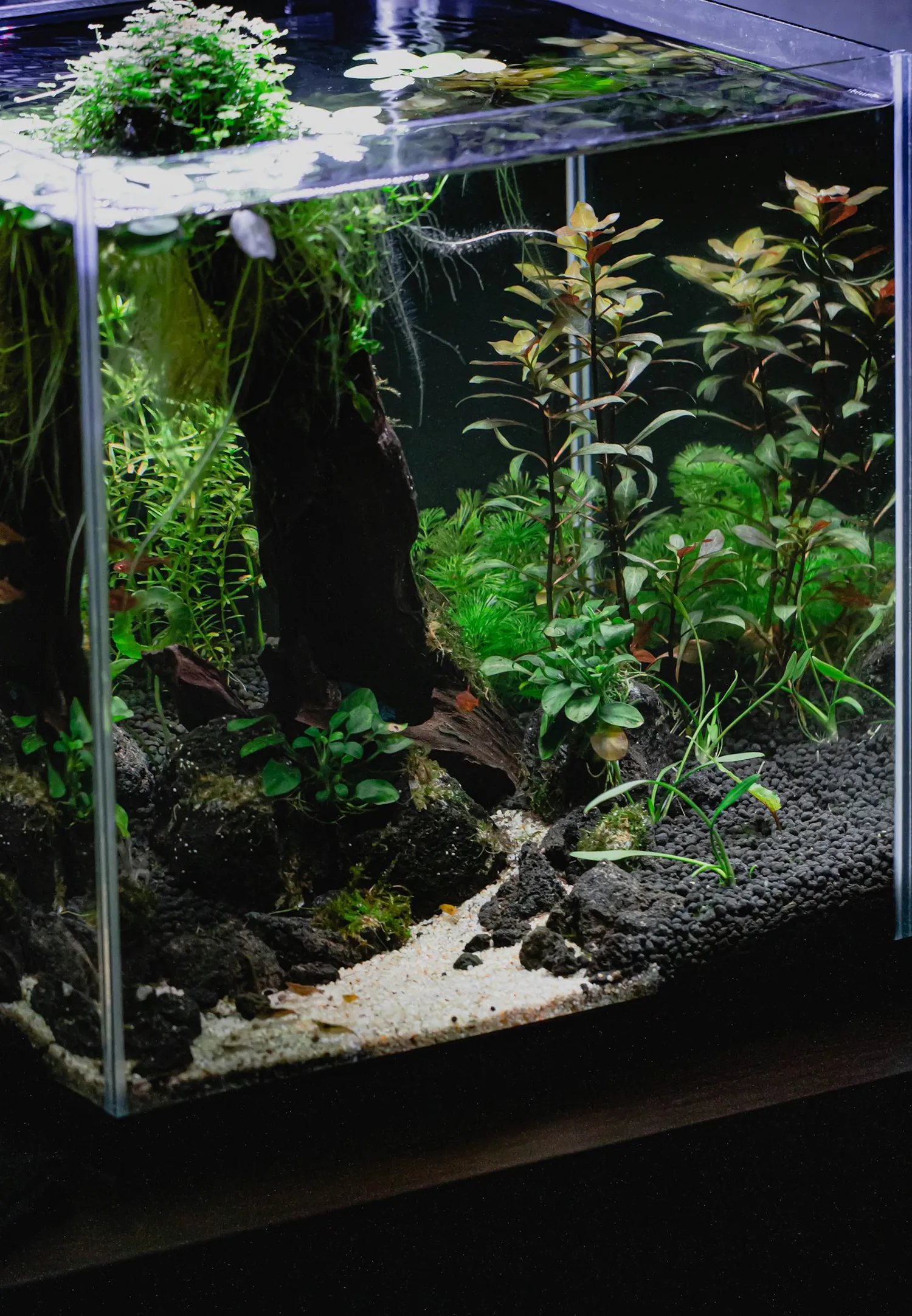
Plants, driftwood and shade let a betta claim somewhere and let everything else stay out of it. In a bare tank there is nowhere to be, so every other fish is permanently in the way.
The full record
| Field | Recorded | Where it comes from |
|---|---|---|
| Minimum tank | 5 to 10 gal | Aquarium Co-Op. Seriously Fish gives a base of 45 by 30 cm for one male or a pair. PetMD gives at least 2.5 gallons and calls 5 to 10 ideal for stable water. Fishkeeping World disagrees with itself on the same page: 10 gallons in its overview table, a minimum of two gallons in its text. |
| Temperature | Around 80 °F | Preferred figure from Aquarium Co-Op, inside the 22 to 30 °C range Seriously Fish records. Fishkeeping World gives the same 72 to 86 as Seriously Fish. PetMD is much tighter at 76 to 81. This row is one of only two on the site that prints a single figure rather than a range, and our betta fish water temp guide has why: the tolerance band underneath it is fourteen degrees wide, both ends of it are temperatures a care source calls fatal, and the 80 °F printed here is one side of a four degree argument. Fishkeeping World calls 80 the point where the fish begins showing poor tolerance. |
| pH | 6.0 to 8.0 | Ornamental strains; wild fish prefer 5.0 to 7.0. PetMD targets about 7 and states a tolerance of 6.5 to 7.8; Fishkeeping World gives 6.5 to 7.0. |
| Hardness | 18 to 268 ppm | Seriously Fish. |
| Adult size | 2.4 to 2.8 in (60 to 70 mm) | Standard length, so finnage adds to what you see. |
| Diet | Carnivore | Small live or frozen invertebrates: daphnia, artemia, bloodworm. PetMD names high protein foods formulated for bettas and gives once or twice a day; Fishkeeping World names betta flakes or pellets with brine shrimp and bloodworms as treats. PetMD is the only source we hold that publishes a maintenance schedule for this species, 15 to 25 percent weekly. |
| Water column | Surface | Breathes atmospheric air through the labyrinth organ. |
| Lifespan | 3 to 4 years | The overlap of the two sources that state one: PetMD gives 3 to 5 years with proper care, Fishkeeping World gives an average of 2 to 4. Neither Seriously Fish nor Aquarium Co-Op states a figure. This field was blank, and the note on it said we would not repeat one from a forum; neither of these is a forum. |
| Growth rate | Not recorded yet | Not stated by any of the four. Fishkeeping World gives an adult size of 2 to 3 in and adds that the better you care for the fish the larger and more vibrant it becomes, which is a direction rather than a rate. Seriously Fish, Aquarium Co-Op and PetMD state no growth figure at all. It is the last blank on this record, on the most searched animal on this site. |
The same nine fields for every animal on this site are in the A to Z index.
Where our sources disagree
This is the one thing about bettas that no care page should smooth over, so we print both positions and what we do with them.
Seriously Fish
Not recommended for the standard community aquarium. Best maintained alone, and species with trailing fins should be avoided.
Aquarium Co-Op
In ten to twenty gallons with cover, quiet company works: ember tetras, harlequin rasboras, corydoras, kuhli loaches.
What we record: both are right about different tanks. In five gallons, alone. In a planted ten to twenty with real cover and an escape route, quiet company usually works, and the word usually is doing honest work in that sentence. Keep a plan for the tank where it does not.
Where it lives in your tank
A betta owns the top few inches and rarely leaves them. That is what makes the rest of the column available, and it is also why surface flow from an unbaffled filter is the complaint you will hear most often.
Feeding
Once a day, as much as the fish clears in about a minute. A betta is a carnivore that hunts small invertebrates, not a pellet disposal unit, and color follows the diet more closely than it follows anything you can buy in a bottle.
| Food | Role | Frequency |
|---|---|---|
| Betta pellets | Staple | Daily |
| Frozen bloodworm | Color and conditioning | 1 to 2 a week |
| Live daphnia or artemia | Closest to the wild diet | When available |
| Freeze dried bloodworm | Convenience treat | Sparingly |
The one minute rule
Anything left after that minute becomes the water quality problem you will be searching about next week. In five gallons there is no dilution to hide behind, which is the real reason small tanks have a bad reputation: they are not cruel, they are unforgiving.
The most asked tank mate question about this fish now has a record on the other side of it. Our african dwarf frog record carries the only source willing to address the pairing directly, and its answer is that there is a possible chance depending on your betta, with countless reports of it working and, in its own words, also many negative ones. The two water bands overlap from 73 to 79 °F, so nothing about the water objects. This record's own disagreement about community tanks is the same shape, and two unsettled questions do not make a settled one.
This site now holds a second fish that breathes air. Our honey gourami record covers the other anabantoid in the shops, and the comparison is worth making because the two are sold side by side to the same beginner. Both have the labyrinth organ, both build a bubble nest, and both are recommended for a first tank. What separates them is the field this record cannot settle: three sources call the honey gourami a peaceful community fish, while this record carries one source that will not put a betta in a community tank at all against another that names five tank mates for it. The water overlaps without any trouble, 72 to 86 °F here and 74 to 81 there, so the pairing appears on our tank mates grid as a caution rather than a refusal, and the reason it gives is this record and not that one.
The question this record answers with one male, never two, now has a page for the other half of it. Our female betta fish guide reads five sources on the female arrangement, and the reason it is a guide rather than a row on this record is that the five do not agree: PetMD, written by a veterinarian, asks for at least 10 gallons with lots of hiding places; Fishkeeping World asks for five or more females; Aquarium Store Depot asks for 20 gallons for five, says 10 gallons is not recommended unless the fish were previously housed together, and says the practice should only be attempted by experts. Wikipedia supplies the reason all three hedge: this species has been bred for aggression for over six centuries, and fighting strains have been shown to be significantly more aggressive than wild bettas. Nothing in those five sources addresses a male in a sorority.
This site now holds a second surface fish. Our clown killifish record covers a 35 mm West African fish that lives at the top of the water, and Aquarium Co-Op names the betta on its tank mate list with a hedge nobody else on that page gets: compatibility depends on individual temperament. Both records leave the same question open, since this one carries a source that will not put a betta in a community tank at all against another naming five tank mates. The water is the harder half: this record prints around 80 °F and that one stops at 79, so the published figures do not meet and the pairing would have to run on this record’s tolerance range of 72 to 86. Our tank mates grid marks it a caution with both reasons printed.
What the starter kit leaves out
Three things this record asks for that a boxed betta kit does not include.
- Adjustable 50 W heaterholds 80 °F
- Frozen bloodwormweekly
- Live or silk plantscover and a resting leaf
Every item our records ask for is gathered on the tank setup topic.
Nothing here is a paid link. It is the shortfall between what this record asks for and what a boxed kit contains.
How this record was compiled
- By
- Verified
- Sources
- Conflicts
Printed above rather than resolved quietly
- Blanks
Growth rate stay empty until a source we trust states them
- Photography
Unsplash license; none of it documents a specific individual fish
Every betta problem you will read about this year traces back to cold water, a bare tank, or a second betta.
Who it can live with
Only in ten to twenty gallons, only with cover, and only with company that stays out of the top of the tank. Each entry carries its reason, because a list without reasons is a list you cannot apply to your own tank.
When it goes wrong, symptom by symptom
It sits on the bottom and stops eating
Check the temperature before anything else. Below the mid seventies a betta slows down, eats less and gets sick more easily, and most of these stories end with a heater rather than medication.
Its fins look torn
Sharp decor, strong surface flow, or water quality in a tank too small to forgive a missed change. Rule out the physical causes before reaching for a bottle.
It flares at its own reflection
Normal in short bursts. If the tank sits against a dark window at night and the fish flares for hours, move the light or the tank rather than the fish.
It builds a raft of bubbles
That is a bubble nest, and it means a healthy male doing exactly what the species does. Nothing to fix, and nothing to read into either: Fishkeeping World states a male will build one for potential offspring even if there are no females around. Bettas are bubble nesters: the male builds at the surface, the pair spawn beneath it and he tends the eggs.
What goes wrong, as a decision rather than a symptom
A tank with no heater in it
This is first because it is the claim at the top of the record: five gallons with a heater beats ten without one. PetMD asks for 76 to 81 °F and Aquarium Co-Op names 80 as the figure to hold. A room at 70 is inside the tolerance Seriously Fish records and outside every recommendation anybody makes, and both sources that publish a lifespan attach it to conditions rather than to the animal.
A second male, in any size of tank
Fishkeeping World states that two males in one tank will likely fight to the death, even in a large one. The rule was already on this record as one male, never two. The consequence was not, and neither was the part that makes it a rule rather than a preference: no tank is big enough to turn it into a different rule.
A long finned tank mate
Not aggression for its own sake: misidentification. Fishkeeping World states that brightly colored fish with long fins get mistaken for another male, and PetMD names tiger barbs as fin nippers and long finned species the betta may spar with. Both halves of that come from the same mistake, which is why the answer is a shape rather than a list of species.
A shrimp colony
Our cherry shrimp record marks this pairing never, and the reason is appetite rather than temperament. Aquarium Co-Op describes bettas as notorious for going after shrimp, and the young hatch at about a millimeter. It is kept successfully in heavily planted tanks, and what makes it work is losses you never see.
A filter aimed at it
PetMD asks for low or adjustable flow because strong currents stress a betta. It is the same instruction our kuhli loach record carries for a different animal and a different reason, and it is the cheapest of the five to get right: a sponge over the intake, or a filter turned down.
Two females, on the strength of a sorority
Both new sources describe a sorority and both give it a floor: five or more animals on Fishkeeping World, at least 10 gallons with lots of hiding places on PetMD. Neither describes two or three females together, which is what most people try. A record that prints a floor and no source for what sits below it will say so rather than guess. The betta silo is where the strains and the sexes are separated out.
Read down that list and the pattern is that four of the six are not about water at all. This is the only record here where most of the failures are decisions about what else is in the tank, which is what the tank mates topic exists to collect and what the stocking calculator refuses to average.
Questions keepers actually ask
How long do betta fish live?
Three to four years on this record, which is the overlap of the two sources that state a figure: PetMD gives 3 to 5 years with proper care and Fishkeeping World gives an average of 2 to 4. Neither Seriously Fish nor Aquarium Co-Op states one.
This field was blank until those two were read, and the note on it said we would not repeat a number from a forum. Neither of these is a forum. Both attach the figure to conditions rather than to the animal, and the condition both name first is a heater.
Can you keep two betta fish together?
Two males, no, and this is the strongest refusal on the site. Fishkeeping World states that two males housed together, even in a large tank, will likely fight to the death. The record's group size has always been one male, never two; that source is the first to state the consequence.
Females are a different question. Both new sources describe a sorority: PetMD asks for at least 10 gallons and lots of hiding places, Fishkeeping World says groups of five or more. Neither addresses two or three females together, which is what most people actually try.
Why is my betta attacking its own reflection?
Because it cannot tell the difference. Fishkeeping World states that holding a mirror or a picture of another male betta up to the tank will make a male aggressive toward the image, believing it is another betta.
The same mechanism explains the tank mate rules rather than temperament doing it: brightly colored fish with long fins get mistaken for another male. PetMD names tiger barbs as fin nippers and long finned species the betta may spar with, and both halves of that come from the same misidentification.
What does a betta bubble nest mean?
Less than people are told. Fishkeeping World states that a male betta will build a bubble nest for potential offspring even if there are no females around. So a nest is not evidence of a female, of successful breeding, or of anything having gone right.
It is the one behavior on this record that arrives with a false interpretation already attached, which is why the record prints the clause rather than the headline.
What is the minimum tank size for betta fish care?
Five to ten gallons on this record, and the sources spread from two to ten. Aquarium Co-Op gives 5 to 10. PetMD says at least 2.5 gallons and immediately calls 5 to 10 ideal for stable water. Seriously Fish gives a base of 45 by 30 cm. Fishkeeping World says 10 gallons in its overview table and a minimum of two gallons in its text, which is one source disagreeing with itself on the same page.
The claim at the top of this record is the part that survives all of that: five gallons with a heater beats ten without one. Every source that gives a low floor gives a reason for going higher in the next sentence, and the reason is always stability rather than swimming room.
What size tank does a betta really need?
Five gallons is the working minimum and ten is better. The reason is not swimming room, it is stability: the smaller the volume, the faster temperature and water quality move, and the fish pays for both.
Can a betta live in a bowl without a heater?
It can survive, which is exactly why the practice persists. A bowl gives you no heater, no filtration and no margin, and the fish spends its life at room temperature instead of the low eighties it wants.
Do bettas need a filter?
Yes, with the flow kept gentle. Heavy finnage and a strong surface current do not mix, so a filter you can baffle is worth more than a powerful one.
How often should I feed my betta?
Once a day, as much as it clears in about a minute, with bloodworm once or twice a week for condition. Everything uneaten comes out of the tank.
Can two bettas live together?
No. Males cannot cohabit, and this is a species trait rather than a question of temperament or tank size.
Can a betta live with shrimp?
Neither of our sources records shrimp as a betta tank mate, so we print no verdict. What they do record is that this is a carnivore that hunts small invertebrates in nature.
What temperature should the water be?
Around 80 °F. The species tolerates 72 to 86 °F, but tolerating and thriving are different words, and the bottom of that range is where the sitting on the bottom stories come from.
Why is my betta blowing bubbles at the surface?
A bubble nest. Normal behavior from a healthy male, and it needs nothing from you.
How long do bettas live?
We have not recorded a figure. Neither source we trust for this record states one, and repeating a number that circulates on forums would make this page look more certain than it is.
Does the tank need a lid?
Yes, for two reasons. Bettas jump, and the labyrinth organ wants a warm humid layer of air above the water rather than a cold draft.