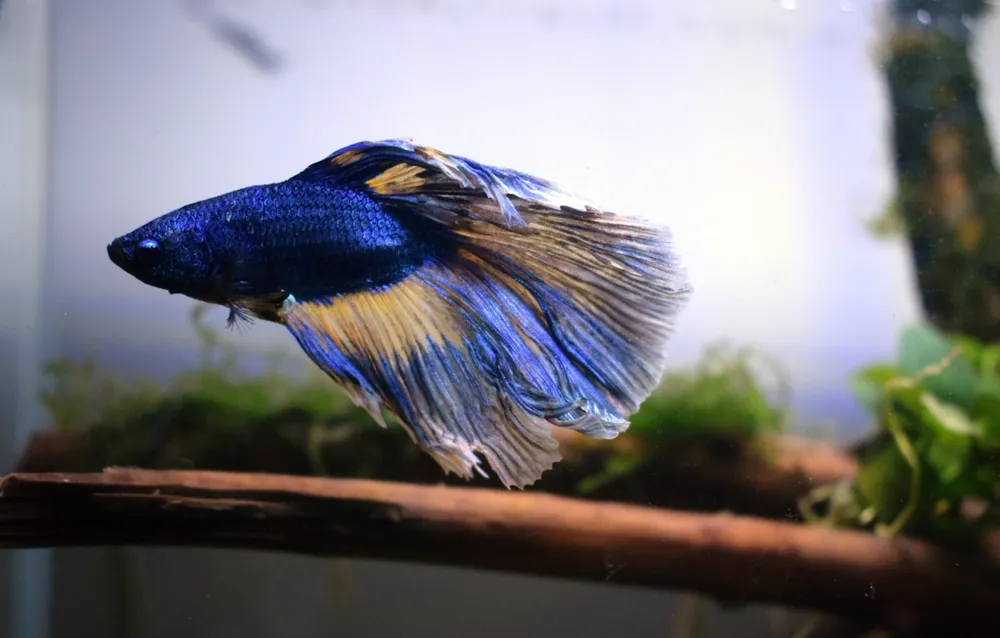
The care record
One record covers the whole silo, because color and finnage are selective breeding rather than separate species. A halfmoon and a plakat carry the same nine fields.
One species, many strains
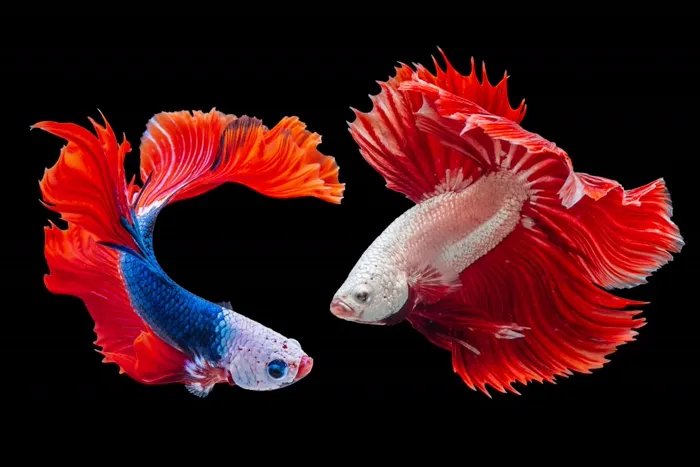
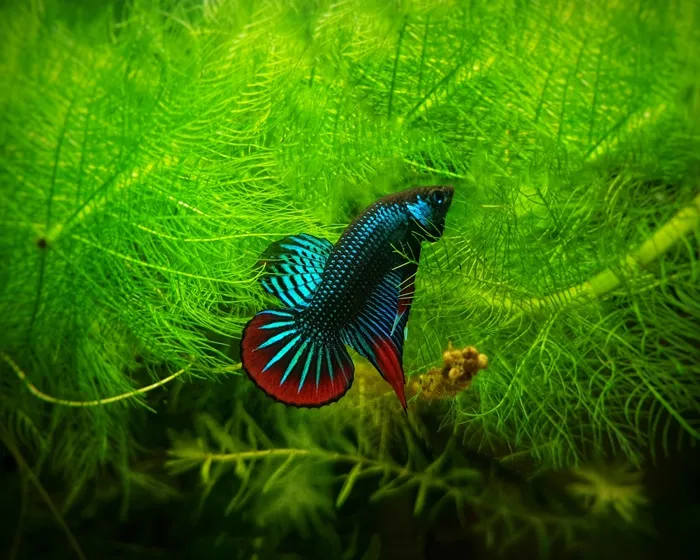
Ornamental breeding has pushed color and finnage further here than almost anywhere in the hobby. Every fish below asks for the same water and the same tank.
Four things the record settles
It breathes air
A labyrinth organ takes oxygen from above the water, so the air layer is part of the habitat. A tight lid holding warm humid air is a requirement, not a preference.
Five gallons is the floor, not the target
The record puts the minimum at five to ten gallons. The reason is stability rather than swimming room: the smaller the volume, the faster temperature and water quality move.
Males cannot cohabit
This is the species, not the individual, and no volume changes it. Trailing fins on other fish read as a rival and trigger the same response.
It is a carnivore
Small live or frozen invertebrates: daphnia, artemia, bloodworm. Color follows the diet, and once a day is the stated feeding rhythm.
The nine fields, and what a strain does not change
Everything the record states, in the fields every species on this site carries. A halfmoon, a plakat, a koi and an alien betta all read off this one column.
| Field | Betta |
|---|---|
| Minimum tank | 5 to 10 gal |
| Temperature | Around 80 °F |
| pH | 6.0 to 8.0 |
| Hardness | 18 to 268 ppm |
| Adult size | 2.4 to 2.8 in (60 to 70 mm) |
| Diet | Carnivore |
| Water column | Surface |
| Lifespan | 3 to 4 years |
| Growth rate | not recorded |
Why strain names are not records
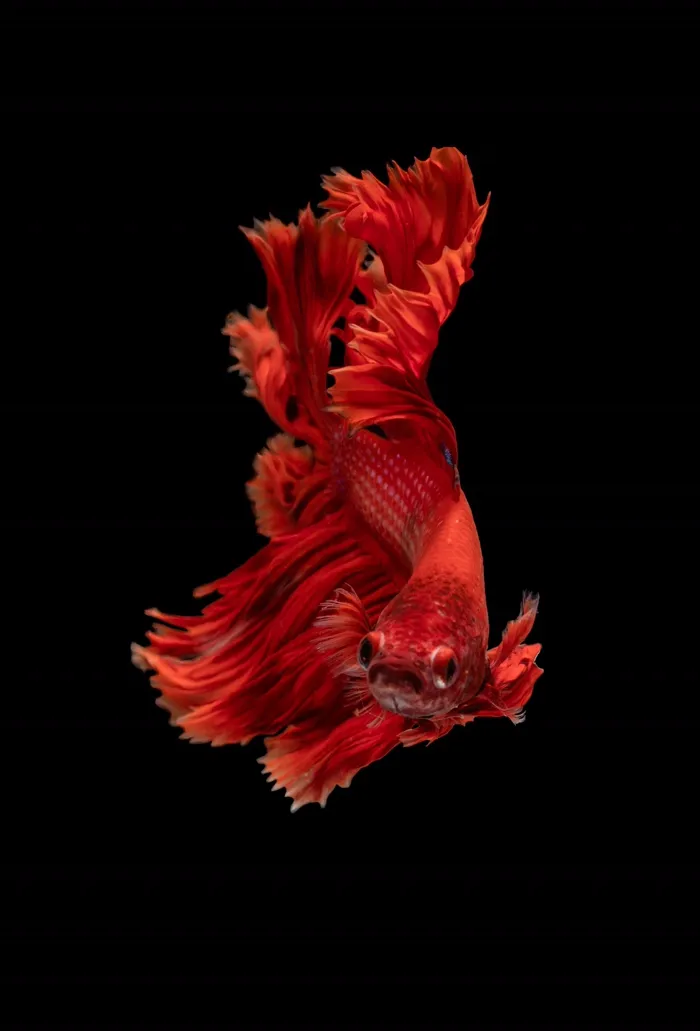
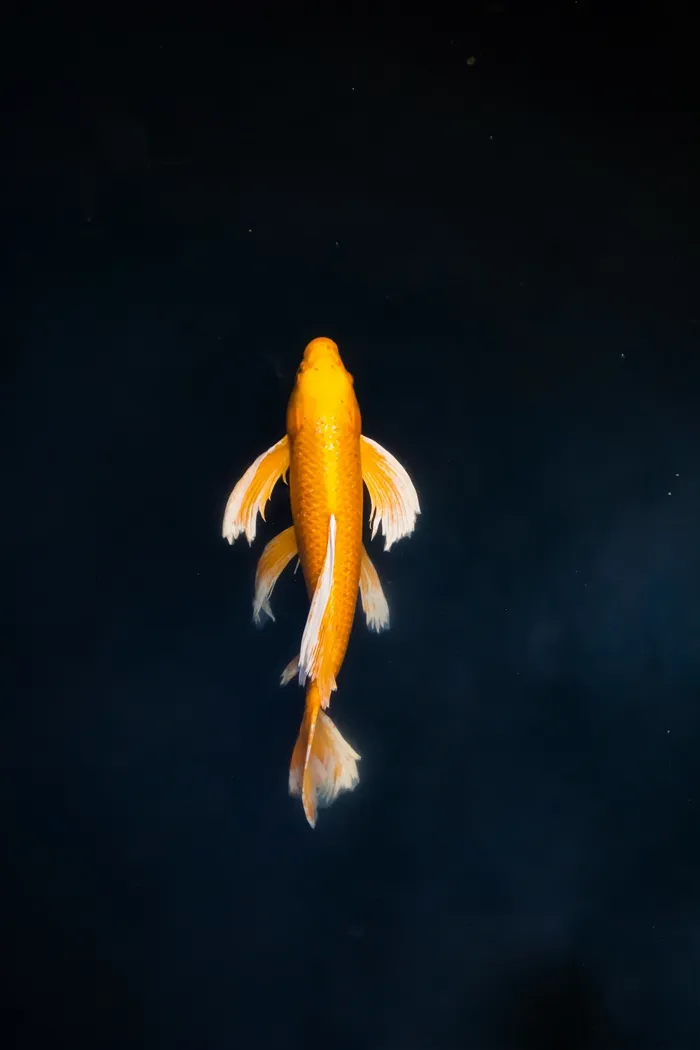
Koi, alien, dumbo, halfmoon, crowntail and plakat are categories of color and finnage that the trade sorts by, and they are among the most searched terms in this hobby. Not one of them changes a figure above.
So this site will not give them pages of their own. Where finnage genuinely changes the keeping, it changes it through a field that is already here: heavy fin mass and strong surface flow is a welfare question, and separated rays and sharp hardscape is a hardscape question. Both belong on the record rather than on a page about a name.
The two blanks, and why
Growth rate is empty. None of the four sources states a rate, and no figure has been borrowed from a fish that is not this one. Lifespan was empty too, for the same reason, until PetMD and Fishkeeping World turned out to publish one: the record now reads 3 to 4 years, the overlap of their 3 to 5 and 2 to 4.
That is the whole of what is missing. Every water figure, the tank, the size and the diet are on the record with a named source beside them, which is more than the fish usually gets.
Questions about betta fish care
What temperature does a betta need?
The record prints around 80 °F, inside a tolerated range of 72 to 86. It is the widest fish range on this site and the reason the record still asks for a heater: the number to hold is one number, not a range, and a room that drifts through the range is not the same as a room sitting inside it.
Do betta fish need a heater?
It depends on your room, not on the fish. The record asks specifically for an adjustable 50 W heater rather than a preset one, because a preset unit gives you whatever the manufacturer chose. In a mixed tank the shared band with every other record here is 74 to 79 °F.
What do betta fish eat?
The record has it as a carnivore: small live or frozen invertebrates, daphnia, artemia and bloodworm, once a day. It names frozen bloodworm weekly as the thing a starter kit does not include, and a tub of flake as the thing it always does.
How big a tank does a betta need?
Five to ten gallons, and the record is explicit that five is a floor rather than a target. The reason given is stability rather than swimming room: the smaller the volume, the faster temperature and water quality move.
Can two bettas live together?
Two males, never, at any tank size. That is the species rather than the individual, and no volume changes it. Trailing fins on other fish can read as a rival and trigger the same response.
Can bettas live in a sorority of females?
Five sources say it can be done and no two of them agree on the conditions, which is why it has a page of its own now: our female betta fish guide. The short version is that a veterinarian writing for PetMD asks for at least 10 gallons with lots of hiding places, Fishkeeping World asks for five or more females, and Aquarium Store Depot asks for 20 gallons for five, says 10 is not recommended unless the fish were previously housed together, and calls the practice expert-only. Our own record still says one male, never two, and none of the five sources addresses a male in a sorority at all.
What fish can live with a betta?
On water alone, every fish record on this site overlaps with it: 72 to 82 °F with the corydoras and the ember tetra, 74 to 79 with the kuhli loach. On temperament our source calls the species territorial and gives no figure beyond that. Cherry shrimp are the one pairing our records refuse outright.
Do betta fish sleep?
Neither source we hold states anything about sleep, so this site has no answer. What the record does ask for is a resting leaf, live or silk, as cover. That is the closest thing to an answer we can attribute, and it is a requirement rather than an explanation.
How long do bettas live?
Neither of our sources states a figure, so the field is blank. It is a number you will find everywhere, and printing it here without an origin would make this record indistinguishable from the pages it exists to replace.
Does a koi or alien betta need different care?
No. They are color and finnage categories, and every figure in the table above applies to all of them. Where finnage matters it matters through flow and hardscape, both of which are on the record already.
What is not here yet
Five betta pages in the queue
These are the betta searches with no page here yet. The sorority was the largest of them by some distance and is now written, as our female betta fish guide. Strain names are not on the list at all: koi, alien and the rest are color categories, so they will be sections of the species record rather than pages of their own.
What the record already answers, of the guides not written
Five guides are queued in this silo and one is written. That is not the same as five unanswered questions, because the betta care record gained two sources and four sections, and some of the queue stopped being blank without a guide being published.
The table says which. Where a guide is marked partly answered, the record holds a sourced figure or a sourced statement and no more: a guide would add the procedure, the equipment and the failure modes, which a record does not carry.
The one that is now written, and the one that moved most
Female betta sorority. Written, as our female betta fish guide, from five sources rather than the two on the record. It prints the disagreement the record could not: 10 gallons per a veterinarian against 20 for five fish per a retailer that says 10 is not recommended and the practice is expert-only. The gap the record named is still a gap: not one of the five sources addresses two or three females, which is the arrangement most keepers actually try.
Betta water parameters. The record now carries four sources on temperature and pH instead of two, and a lifespan of 3 to 4 years that both new sources tie to keeping the water warm rather than to the fish. What it does not carry is a filter recommendation beyond the instruction PetMD gives, which is low or adjustable flow.
What a betta aquarium needs that the record will not state
Every source in this silo names a heater and a filter as the two pieces of equipment that decide the outcome, and the record names neither as a field, because a field takes a number and no source we hold publishes one for either. What the record does hold is the consequence: PetMD asks for 76 to 81 °F and a low or adjustable flow, and Aquarium Co-Op names 80 as the figure to hold.
The same applies to food and to plants. PetMD names high protein foods formulated for bettas and a feeding of once or twice a day; Fishkeeping World names betta flakes or pellets with brine shrimp and bloodworms as treats. No source states a plant as a requirement for this species, so no plant appears in a field, and the aquarium plants silo says which plants our other records name.
Why the guides are queued rather than skipped
Because a record and a guide answer different questions. A record says what the sources state about the animal. A guide says what to do on a Tuesday with the tank you already own, and the two most searched things in this silo, a betta not eating and betta fin rot, are entirely on the guide side of that line. Neither has a source we hold, and until one does, the honest answer is the queue.
| Queued guide | On the record now | Still needs a guide for |
|---|---|---|
| Betta water parameters | Four sources on temperature and pH, and a lifespan tied to the heater | Equipment, testing, and what to change when a reading is wrong |
| Female betta sorority | Two sources: 10 gal minimum, five or more animals, hiding places | Two or three females, which no source we hold addresses |
| Betta with shrimp | A refusal, from the cherry shrimp record, on appetite rather than aggression | The heavily planted version people keep successfully anyway |
| Breeding bettas | The bubble nest, and that a male builds one with no female present | Spawning, the fry, and the tank that is not this tank |
| Betta not eating | A symptom entry pointing at temperature first | Everything else, and no source we hold covers it |
| Betta fin rot | A symptom entry: rule out sharp decor, flow and water quality | Everything else, and no source we hold covers it |
Read the right hand column and the pattern is that the two most searched problems in this silo are the two we can say least about. That is not a coincidence: a fish disease is the part of betta care that a care source describing a species does not cover, and it is the part a keeper needs at eight in the evening. The record will not invent it, and the guide will not be written until there is a source to write it from.